Which material suits your playing style, climate, and budget — without the marketing fluff.
In this guide:
- The question every buyer hits within the first hour of research
- Nitrided Steel vs Stainless Steel Handpan: The Sound Difference
- The part nobody wants to talk about: maintenance
- What about the price difference?
- Nitrided Steel vs Stainless Steel Handpan: Quick Comparison
- So which one should you pick?
- What I’d tell a friend
The question every buyer hits within the first hour of research
You’ve figured out your scale. Probably D minor. Maybe you’re still debating between D Kurd and C# Pygmy. And then you hit the nitrided steel vs stainless steel handpan question — two instruments that look almost identical, same scale, same number of notes, but one says ‘nitrided steel’ and the other says ‘stainless steel.’
And the price difference can be hundreds of dollars.
So which one?
I’ve played both. I’ve owned both. And I’ve watched friends struggle with this exact decision — some got it right, some spent money they didn’t need to, and one guy bought a nitrided steel handpan, moved to a coastal city, and regretted it within six months. Here’s everything I wish someone had laid out for me in one place.
Nitrided Steel vs Stainless Steel Handpan: The Sound Difference
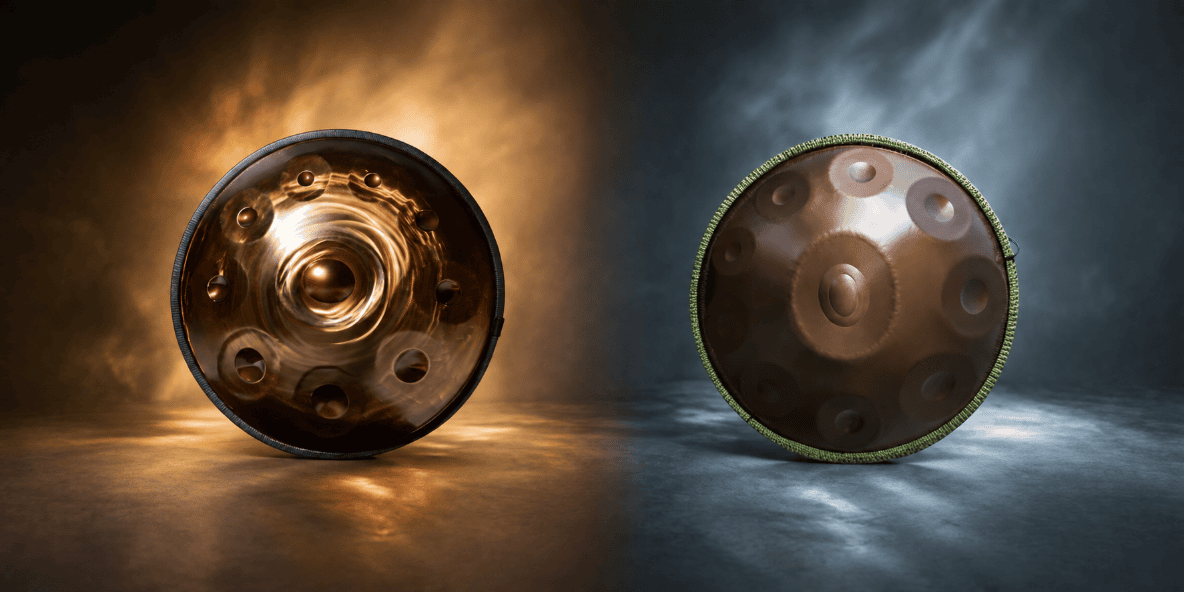
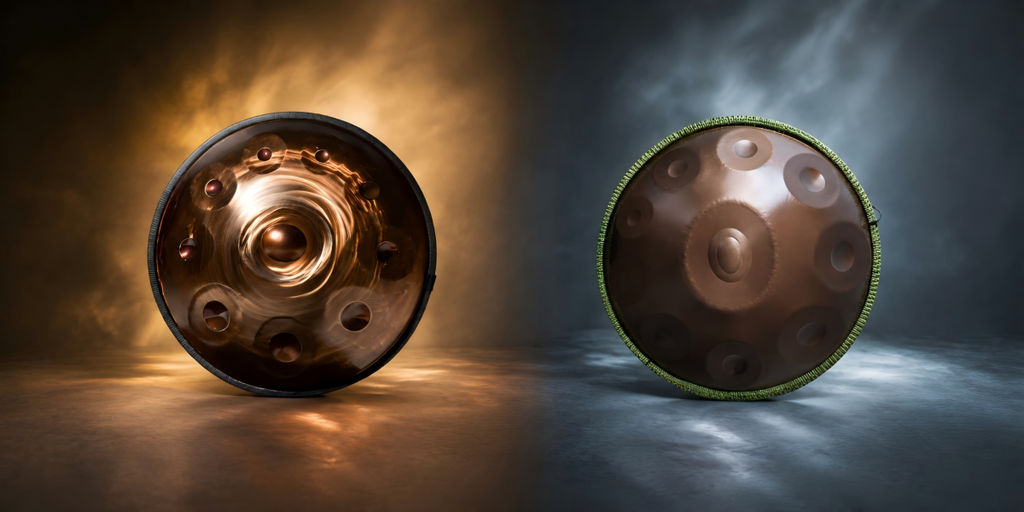
Nitrided steel is warmer. That’s the word everyone uses, and for once, it’s actually accurate.
When you strike a nitrided handpan, the note blooms — it starts full, spreads outward, and decays slowly, with a kind of velvety texture to the overtones. Close your eyes and it feels like the sound is wrapping around you. This is why most handpans you hear in meditation videos and sound baths are nitrided steel. The sustain is longer, the harmonics are richer. It just… lingers.
Stainless steel is brighter. More percussive. The notes are clearer, more separated — they have a bell-like quality, almost crystalline. It’s not worse. It’s different. If nitrided steel sounds like a warm room with the lights dimmed, stainless sounds like morning sunlight through a clean window.
You don’t need a sound wave graph to hear the difference. Put on headphones. Listen to both. One will make you want to close your eyes and breathe slower. The other will make you want to tap your fingers and explore rhythms. Neither is wrong — they’re just aimed at different parts of you.
If you’re after relaxation, meditation, or the kind of playing where you lose track of time — go nitrided. If you want something that cuts through a bit more, that feels rhythmic and articulate — stainless might actually be the better fit.
The part nobody wants to talk about: maintenance
Let me be blunt. Nitrided steel requires care. Stainless steel… basically doesn’t.
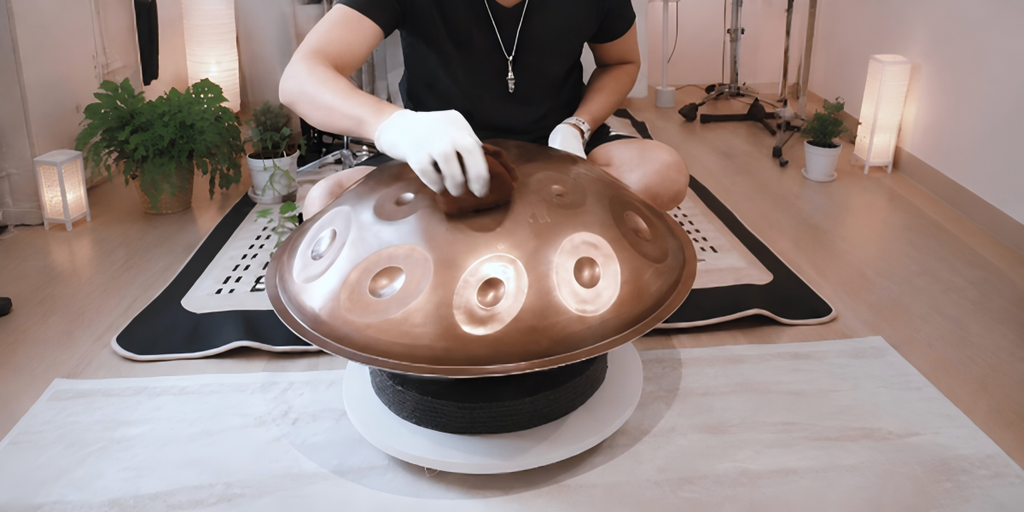
Nitrided steel has a surface treatment that gives it that warm tone, but it’s more susceptible to rust if you neglect it. You need to wipe it down after every session — just a soft microfiber cloth, 10 seconds. And every two to three weeks, you should apply a thin layer of protective oil. It’s not hard. But you have to actually do it. For the exact routine, see our Care Guide.
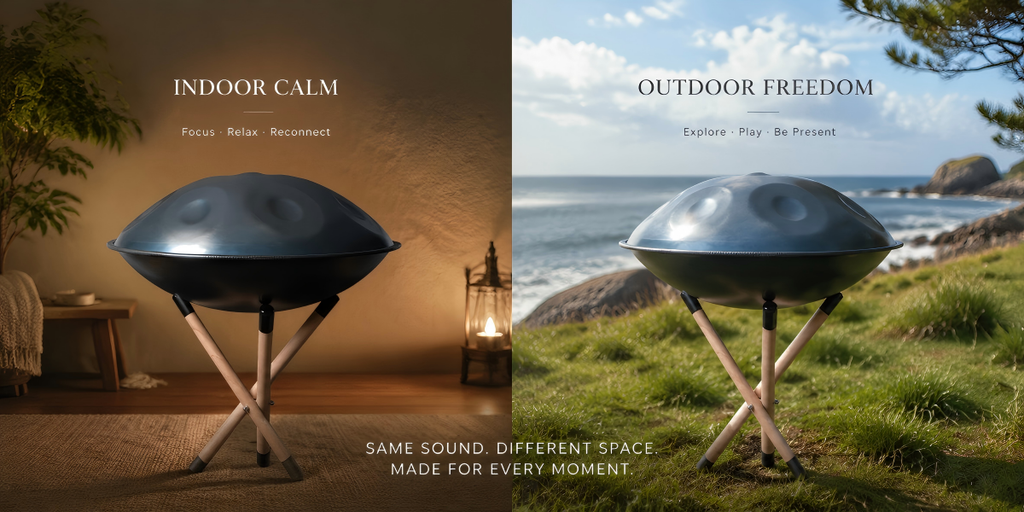
Stainless steel laughs at humidity. It’s the low-maintenance option for a reason — though a quick wipe after play is still good practice. If you live near the ocean, in a tropical climate, or you’re the kind of person who knows you’ll forget to oil your instrument, stainless steel is forgiving in a way nitrided steel just isn’t.
I know someone who left a nitrided handpan in its case for three humid summer weeks without wiping it down. The rust spots weren’t catastrophic, but they were there — and every time he plays now, he sees them. Don’t be that guy.
What about the price difference?
Nitrided steel handpans tend to be slightly more expensive — usually $100 to $300 more for a comparable instrument. The reason is the nitriding process itself: it’s an additional heat-treatment step that requires skill and time.
Is it worth it? If you’re after that warm, meditative tone — yes, every dollar. If you’re in a humid climate and you know you’ll struggle with maintenance — no. Save the money. Get stainless. Put the difference toward a better case or a stand.
The mistake people make is treating this like a quality judgment. It’s not. A well-made stainless steel handpan from a skilled maker will sound better than a poorly made nitrided one every single time. Material is a preference, not a ranking.
Nitrided Steel vs Stainless Steel Handpan: Quick Comparison
| Aspect | Nitrided Steel | Stainless Steel |
| Tone | Warm, rounded, earthy | Bright, clear, crystalline |
| Sustain | Longer, notes bloom and fade | Clear note separation |
| Maintenance | Wipe after play; oil every 2–4 weeks | Minimal; occasional wipe |
| Humidity / rust | Needs more care in humid climates | Excellent rust resistance |
| Best for | Meditation, sound healing, deep relaxation | Humid climates, outdoor play, rhythmic playing |
| Price | Usually $100–$300 more | Usually less expensive |
So which one should you pick?
Here’s the real answer, the one most comparison guides won’t give you: it depends on you, not the instrument.
Go with nitrided steel if…
- You want the warmest, richest tone possible.
- You’re buying for meditation, sound healing, or deep relaxation.
- You don’t mind spending 10 seconds wiping it down after playing.
- You live in a relatively dry climate or you’re disciplined about care.
Go with stainless steel if…
- You live somewhere humid or coastal.
- You plan to play outdoors often.
- You know yourself well enough to admit you’ll forget to oil it.
- You actually prefer a brighter, more articulated sound.
- You want to spend a little less.
Neither choice is wrong. The wrong choice is buying a cheap, poorly tuned handpan regardless of the material — and you can read more about that in our full beginner’s guide.
What I’d tell a friend
If you held a nitrided and a stainless handpan side by side and asked me which one to take home — and you didn’t live by the beach and weren’t planning to play in the rain — I’d hand you the nitrided one. Not because stainless is worse. But because that warmth, the way the notes bloom and fade, is what most people fall in love with when they fall in love with the handpan.
But if you’re in Miami, or you’re the kind of person whose guitar strings haven’t been changed since 2022 — get the stainless. Seriously. You’ll play more, worry less, and the music will still be beautiful.
We can send you raw, unedited demo recordings of both materials — same scale, same melody — so you can hear the difference with your own ears. No studio tricks. Just the instruments, played plainly.
And if you’d like to see the full picture before deciding, our complete buying guide walks you through every decision a first-time buyer faces — scales, notes, sizing, and more.